The Great Molecular Shift: Low-Carbon Ammonia in the 2026 Energy Landscape
As we navigate the mid-point of this transformative decade, the global energy map has been fundamentally redrawn. In 2026, the industrial world no longer views ammonia ($NH_3$) merely as a cornerstone of the fertilizer industry. Instead, it has emerged as the premier liquid energy carrier, the “green oil” of a decarbonized planet. The catalyst for this shift? The seamless integration of low-carbon ammonia synthesis with large-scale green hydrogen feedstock.
The vision of a hydrogen economy, once confined to white papers and pilot projects in the early 2020s, has reached industrial maturity. Today, the synthesis of ammonia through water electrolysis powered by renewable energy has moved from “alternative” to “imperative.” We are witnessing the convergence of food security and energy security, driven by a molecular revolution that is rewriting the rules of global trade and heavy industry.
Key Takeaways for 2026
- The Hydrogen Link: Green hydrogen has transitioned from 10MW pilot plants to 1GW+ industrial clusters, providing the high-purity feedstock required for zero-carbon ammonia.
- Decoupling from Methane: The industry is rapidly moving away from Steam Methane Reforming (SMR), insulating ammonia prices from volatile natural gas markets.
- The Maritime Frontier: Ammonia is now the leading contender for deep-sea shipping fuel, with the first wave of dual-fuel ammonia vessels entering active service this year.
- Policy as a Catalyst: Mechanisms like the U.S. Inflation Reduction Act (IRA) and the EU’s Carbon Border Adjustment Mechanism (CBAM) have reached full operational velocity, making green ammonia cost-competitive with “grey” alternatives.
- Dynamic Synthesis: New Haber-Bosch variants are designed for “flexible operation,” allowing synthesis loops to ramp up and down in sync with intermittent renewable energy inputs.
The Feedstock Transformation: Why Green Hydrogen is Non-Negotiable
In 2026, the definition of “clean” ammonia is strictly scrutinized. The era of vague “blue” or “turquoise” labels has given way to rigorous lifecycle analysis (LCA). At the heart of this is green hydrogen feedstock. Produced via electrolysis—splitting water using wind, solar, or nuclear energy—green hydrogen eliminates the carbon dioxide byproduct inherent in traditional fossil-fuel-based methods.
The scale-up of Proton Exchange Membrane (PEM) and Solid Oxide Electrolyzer Cell (SOEC) technologies over the last 24 months has been staggering. By utilizing green hydrogen, ammonia producers are achieving a carbon intensity reduction of over 90%. This isn’t just an environmental win; it is a tactical business move. As carbon pricing globally hovers near historic highs, the “carbon tax shield” provided by green hydrogen feedstock has become a vital component of corporate balance sheets.
Engineering Haber-Bosch 2.0: Flexibility and Modularity
For over a century, the Haber-Bosch process was a rigid, steady-state beast designed to run 24/7 on a constant stream of natural gas. The 2026 paradigm is different. The industry has mastered Dynamic Ammonia Synthesis. Today’s state-of-the-art plants are engineered to breathe with the grid.
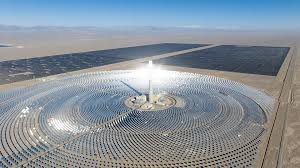
Using advanced catalysts and digitized control systems, modern ammonia loops can now handle the fluctuations of a renewable-heavy power mix. Furthermore, we are seeing the rise of modular ammonia synthesis. Small-scale, containerized units are being deployed directly at the source of renewable generation—offshore wind hubs and massive desert solar arrays—bypassing the need for extensive hydrogen pipeline infrastructure. We are no longer bringing the power to the plant; we are bringing the plant to the power.
The Rise of SOEC Integration
A major breakthrough in 2026 has been the industrial-scale integration of Solid Oxide Electrolysis Cells (SOEC) with ammonia synthesis. Because the Haber-Bosch process is exothermic (it releases heat), this waste heat is now captured and fed back into the SOEC units to increase electrolysis efficiency. This “thermal synergy” has pushed the round-trip efficiency of green ammonia to levels previously thought impossible, narrowing the price gap between green and grey ammonia to within striking distance.
Ammonia as the Global Energy Vector
While fertilizers still account for a significant portion of demand, 2026 marks the year that energy applications began to tilt the scales. Ammonia’s advantage over pure liquid hydrogen is its energy density and ease of transport. It can be stored at modest pressures and temperatures, utilizing existing global infrastructure built for the fertilizer trade.
1. Decarbonizing the High Seas
The maritime industry, responsible for nearly 3% of global emissions, has reached its tipping point. Ammonia is no longer a “future fuel”; it is the current fuel of choice for newbuild orders. With major engine manufacturers like MAN Energy Solutions and Wärtsilä delivering ammonia-fueled two-stroke engines, the first zero-emission trade corridors between Asia, Europe, and the Americas are now operational.
2. Long-Duration Energy Storage (LDES)
As grids become increasingly reliant on variable renewables, the need for seasonal storage has become acute. In 2026, ammonia is functioning as a “liquid battery.” Excess solar energy from the summer is converted into ammonia, stored in atmospheric tanks, and then cracked back into hydrogen or co-fired in turbines to provide stable power during the winter months. This molecular storage capability is the glue holding high-renewable grids together.
The Geopolitics of the Nitrogen Economy
The shift to green ammonia is also a shift in geopolitical power. In the fossil fuel era, ammonia production was tethered to regions with abundant natural gas. In 2026, the new “Ammonia Superpowers” are those with “Renewable Abundance.”
Nations in North Africa, Latin America, and Oceania have become major exporters of green ammonia. We are seeing the emergence of “Green Corridors”—dedicated shipping routes between renewable-rich exporters and industrial importers like Germany, Japan, and South Korea. This democratization of energy production is fostering a more resilient, albeit more complex, global supply chain.
Industry Outlook: 2027-2030
Looking ahead, the momentum behind low-carbon ammonia is irreversible. By the end of this decade, we expect the following milestones to be achieved:
- Cost Parity: By 2028, in regions with high carbon taxes and cheap renewables, green ammonia will be cheaper to produce than fossil-derived ammonia.
- Direct Ammonia Fuel Cells: Research currently in the “demo” phase in 2026 will likely yield commercial direct-ammonia fuel cells for heavy-duty trucking and rail by 2030, eliminating the need for bulky on-board “crackers.”
- Agricultural Premium: A “Green Food” label will become standard, where consumers pay a slight premium for produce grown with zero-carbon fertilizers, further incentivizing farmers to make the switch.
- Standardized Certification: Global standards for “Green Ammonia Certification” will be fully harmonized, allowing for seamless spot-market trading of carbon-neutral molecules.
Conclusion: The Molecular Imperative
In 2026, we are no longer asking *if* green ammonia is viable, but *how fast* we can build it. The synthesis of ammonia using green hydrogen feedstock represents more than just a technological upgrade; it is a fundamental realignment of human industry with the planetary boundaries.
For investors, policymakers, and engineers, the message is clear: the nitrogen molecule is the key to unlocking a net-zero future. Those who master the synthesis, transport, and utilization of low-carbon ammonia are the architects of the new energy economy. As we look toward 2030, the “Hydrogen-to-Ammonia” pathway stands as the most credible, scalable, and visionary solution for a world in transition.
The era of grey molecules is ending. The age of green ammonia has arrived.